
Leadership training and skill building. Up-to-date information.
National and local experts teach participants about the local, state and national issues that affect individuals with disabilities.
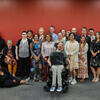
C2P2 2025 graduates at Temple University in Harrisburg
Our own Jonathan Fulton, Support Service Coordinator at the Institute on Disabilities, interviews C2P2 participants about their experiences with disability, accommodations, the program itself, and more.
Listen to the latest episode on Apple Podcast or your player of choice.
Activist, writer, and para-educator Michelle Steiner, a participant in the 2026 class of C2P2, speaks to Jonathan Fulton, support service coordinator at the Institute On Disabilities, about her experience growing up with a disability, finding her place in the world, and her work now.
Listen now: Michelle Steiner, Part One
Part two, focusing on what Michelle learned at C2P2, will be posted later this year, after the program ends.
Links:
Jonathan Fulton: Michelle Steiner, welcome! You are a 2026 C2P2 participant. Why don't you explain to me a little bit about your personal journey of what brought you to C2P2?
Michelle Steiner: Sure. I'd be happy to. I'm excited to have this conversation. What brought me to C2P2 is definitely my story of having a learning disability myself. I was diagnosed with a learning disability in kindergarten and I really struggled all those years. My teacher noticed I was really having a difficulty in the classroom with being able to count, tie my shoes and write my name. And she suggested to my parents that I get tested for having a learning disability. And sure enough, I have one. And I can remember they didn't put a direct name on it at that point. It was more of just a blanket term. But they knew by the time I was five or six, I was not going to be a mathematician. Now that's something they knew. And I had to repeat kindergarten. And I just went through all those years of school. I had a lot of difficulties just with learning. I had to repeat that grade and I began to receive specialty services and accommodations all throughout my years of school. And it was a real struggle for me to learn. I remember just being really frustrated. And I also struggled socially because I went to a really small school where everybody knew each other and you fit in if you were one of them. And if you didn't, you definitely didn't fit in. So everybody could see that I struggled in the classroom and that I went to learning support. I did eventually improve. It got a lot better for me academically. I was in all regular ed classes by the time I was in high school, except for math in a resource room. Socially, it got harder for me, but I was able to find a really great community outside of our school group. I found an arts group that was just right out of our district. And I found acceptance with them and then peers who shared my interest. After I transitioned out of that group, I found a great writing group for adults, and they always encouraged me to write about having a learning disability. And I thought at that point, oh no, I'm not ready. That's way too personal. I am not going to talk about this. And I wrote some really bad poetry and other things I wouldn't want to share today. And I can remember the real question came to, well, what was I going to do after I was done with high school? I knew I wanted to go to college, but I knew it was going to be difficult with my disability and I wasn't alone in those fears. I had a learning support teacher who told me, well, "I don't think you can go to college because of your disability." So she suggested that I go to a trade school. Well, nothing there at the trade school interested me, and I decided, okay, I'm going to be able to, I definitely want to go to college. I got connected with office for Vocational Rehabilitation, and in order to get the funding and the accommodations at college, I had to be tested for a learning disability all over again. And my scores were so low. Never been a great, great test taker that the psychiatrist who evaluated me said, well, you're most likely not going to go beyond community college. I get to community college and there's even more stigma that I faced. Everybody, I had faculty and I had other students, who thought that using disability accommodations was cheating. When I asked for a calculator in a math class, I was told, oh no, we use our brains in this class. And I had an advisor who told me that, well, you're going to have really limited job choices once you graduate, because you won't know how much paper to give students if you're going to do an art, an art lesson. And I was really discouraged. I spent a great deal of those years being really frustrated, and I just went ahead and I did it scared. And I struggled a lot, too, in my classes. And eventually I did get extended test time, and I was able to graduate. I enjoyed moving out on my own. I had some temp jobs. I especially liked having my independence because I'm not able to drive. And even though I lived in a small town, we were still. I was still able to walk to places and take the bus.
Jonathan Fulton: What area of Pennsylvania are you in?
Michelle Steiner: I am in Western Pennsylvania, so I live in Butler. So yeah.
Jonathan Fulton: Yes.
Michelle Steiner: Right outside of Pittsburgh.
Jonathan Fulton: Yeah.
Michelle Steiner: So I, I enjoyed all that. I, I loved having that independence, but I always wanted more for myself and for financial reasons, I had to move back in with my parents. And it was during that time I decided I'm going to go back to university, and I carefully researched programs that had the least amount of math and science possible, and I was able to find a program that had all that and had disability accommodations and had a better time. I made sure that I used all the accommodations and I advocated for myself and I did much better. My grades improved. I was able to make Dean's list for a semester, and I graduated with a bachelor's degree that people said I couldn't do.
Jonathan Fulton: What's your bachelor's degree in?
Michelle Steiner: It is in. They call it transition specialist now, but it was community programming for Americans with disabilities.
Jonathan Fulton: So let me ask you this. I myself was diagnosed with a learning disability in elementary school or middle school. And I have my own theory about that where I kind of laugh at those who diagnosed me so many years ago. When you found a topic or a subject that interested you, how was your learning process and how was, I mean, compared to being put in a class of math where you were assigned to and it didn't interest you. If you were put into a class or a subject that did interest you, what were the differences? Was there any differences between the two?
Michelle Steiner: Definitely. Reading and English were definitely one of those things I loved in writing. I always gravitated towards that. My dad would read me stories every night before I went to bed, and that was actually a real game changer for me because I found that I like to write and I love to read. And my dad found a story that I wrote about a dinosaur in second or third grade and he said, "Wow, this is really good." And I never thought I was good at anything up until that point. And I started to realize, well, that's what interested me. And I was in all those classes, but especially the English classes. That's where I really started to. I had those interests and it was developing those strengths. And that's something that just grew as I was an adult. The more I started to focus on things I like to do, the more empowered that I felt compared to the things that I didn't like to do.
Jonathan Fulton: Yeah. And, obviously when you're, when you're younger, a lot of times you get, a lot of the feedback from the school, from the teacher, and even overwhelmed about the things that you can't do and what you do struggle with.
Michelle Steiner: Right.
Jonathan Fulton: And not as much is being emphasized on wow, like, the strengths and the things that you do effortlessly and things of that nature. Thank you for sharing because, especially when you feel like you're the only one in a class that cannot follow along with, you know, what is perceived to be as a simple problem, I would imagine myself as like a cartoon character, just kind of like sinking, sinking, sinking and wanting to go completely flat underneath the crack of the door and just slide out into the hallway just to exit the situation. So, um, yeah, I can totally relate.
Michelle Steiner: Exactly. Looking for that, that, that the floor to open up.
Jonathan Fulton: So since you graduated with your bachelor's, what was your next step and or next chapter of your life?
Michelle Steiner: Right. One of the first things was trying to find a job. That was something that was difficult. I worked for some employers that said they were disability-friendly and knew what to do for people that had physical disabilities, but they didn't understand learning disabilities, so some of those jobs didn't quite work out. They didn't work out. And there was an opening. Uh, one of the schools I used to work at, one of the districts, for a paraprofessional. And I can remember telling my husband, I bet I'm just going to get on the sub list. And I was really surprised because we were on a, on a trip and we came home and there was a message for a permanent position. And I began my journey with working for my employer. And I started out as a one-on-one paraprofessional for a student. And since then I have been working as an itinerant para. I'm working with seventh graders this year, and it's kind of like hearing a recording of myself at that age. "I hate my disability. I wish I didn't have it." And I get this unique thing with having empathy because it's one of those things. I understand what a lot of my students are facing. Not every single one of them. Everybody is different, but there are some really common themes, and I have that opportunity to be able to work with them and to understand that, because that's where I sat all those years, and I get to show them how to advocate for themselves, because for all my students, they're going to one day graduate and leave me and I hope all their dreams come true. But for a lot of them, their disabilities are going to be there. So I just feel it's so important to show them that now. Another thing that happened was I ended up getting married. I met my husband while I was in college, and, after we got married, that led to another dream of mine happening when we bought our home. I could not unlock our front door, and I was diagnosed with limited hand dexterity shortly before that. And I was so frustrated. And there was a call on *The Mighty* for: "What's a seemingly easy task for others, but it's really hard with your disability?" And I wrote about it and it got published on *The Mighty*, and I had a great acceptance from that. A lot of great feedback. And that encouraged me to write other articles for them and to write for some other places and to start my own blog, *Michelle's Mission*, and another unexpected thing happened, too. I developed a love for photography, and I started to notice when I'm on my walks, and I get that chance to take pictures of flowers and other things that I see, and I get to notice details that other people miss. And people say, wow, you bring out the details of a flower, and I get that chance. And to think to myself, oh, I could be sad that I don't have a ride. But I think of all the beauty I would miss. And I just get that chance to stop and smell the roses and to be able to see all those things.
Jonathan Fulton: Yeah, I, I feel as though when, you know, um, you know, having a learning disability is one of those individual, invisible, disabilities. Um, and especially, you know, with dyslexia and things of that nature, they go, oh, yeah, it's because you read things backwards, you can't see things straight. But through my over four decades of, uh, life's journey, I think having a, what is labeled a learning disability is actually a superpower because a lot of times people will see it forward, people with learning disabilities, they're commonly they're skipping ahead, they're trying to look for where's the point? Or if they read backwards, they're reverse engineering things, which is how engineers work. So for somebody like you, photography, you get to stop and notice all the details that others might be like, "Oh, I've seen a flower before, Whoopity-do!" But you're going to stop and notice maybe a different color, or maybe this one's got extra petals. There's some uniqueness about it. And of course, you obviously probably stop and capture that moment when others would just pass on by.
Michelle Steiner: Right.
Jonathan Fulton: Curious question, though. The children that you work with, is there, can you recall kind of like a moment where, you know, working with one of your students where you were able to help them recognize one of their strengths and lean into their strengths when they other otherwise felt self-conscious in that moment or something like that.
Michelle Steiner: I can count sometimes if I'm working with a student and especially with art. Or I'll notice little things that they do, especially maybe some artwork and I'll say, wow, that's really good. And some of them are really hard on themselves, but other ones will thank you, you know you can find something really good at that that they're good with. I can remember there was also another student that had some behavior issues and could be it could be difficult at times. And he had a hard time with sitting still. But when the teacher would call him up to present, he could present the information. And there wasn't any behavior issues when he was up in front of the classroom. So I think it was saying, "You did a really good job with that presentation," and just finding those ways to be able to reach those students, because we have so many of them that go into our classes and they think similar to what I did whenever I was growing up, "I'm really not smart. I'm really not good at anything because what I'm hearing is everything that I'm doing wrong." And I think when we can find what that student is good at and develop that rapport, then that just makes all the difference in the life of, of a child.
Jonathan Fulton: Absolutely. And so that one student that had all that energy sitting down, well, he's not an audience member. He's a performer.
Michelle Steiner: Yes.
Jonathan Fulton: You know, he's if he's got that, if that student has that energy, you know, let's find some way to kind of produce, continue to channel that energy in a positive way. Um, so what was the issue with your front door? You said, you know, you got some mobility issues. Um, was there any type of like, uh, accessibility solution you created for yourself in that situation?
Michelle Steiner: One of those things, um, that we have used like a key that had a little bit of like texture to it that that has been one of them. Um, yeah, I'm still looking into eventually what we probably want to do is get one of the locks that's a smart lock that we can do that. That's, that's on the list that we're trying to look into. Um, but I've also found other ways though, to help out with the hand dexterity. Like I'm not able to use a manual can opener. So we have an electric can opener that I'll use in bottle openers and some jar openers and things like that that can really help whenever that happens. Um, dictation software on with, with the computer or on my, on my tablet that I can do because sometimes, I mean, typing is definitely better than my handwriting, but that it can be a little difficult to that, that is another way to enable that. So it's just looking for those solutions to handle those problems.
Jonathan Fulton: Yeah. And now more than ever, there's so many different, um, uh, opportunities to find so many different, uh, accessibility features and devices and also to, with, obviously with the internet being able to research any type of assistive technology or anything. And when years ago it was just like, oh, it's just how it is. There's nothing you can do. You got to figure it out, you know?
Michelle Steiner: Yes.
Jonathan Fulton: Um, but a lot of times the most creative inventions, innovations do come from, creating accessibility for people with disabilities. So it's kind of one of those unique things. So you're a 2026 C2P2 participant. Um, how did you hear about the this program?
Michelle Steiner: I am involved with the PA Council for Developmental Disabilities, and one of the people that is on there said, hey, you might want, you might be interested in this program. And I applied through with that, too. And I believe I heard about it through some other places as well. And I thought this was just definitely the right time to do it.
Jonathan Fulton: Wonderful. I mean, uh, we're in February right now and, um, we have eight sessions total. We just passed through one session and we got the second one coming up. Um, any type of, uh, reflection based off the first session that we went through?
Michelle Steiner: I think it was definitely interesting to hear about the history of the independent living movement and also with the parent movement as well. And I thought as much progress that has been made, there is just still so much that needs to be done as well.
Jonathan Fulton: Excellent. It's like we're only keepers until the next generation. And so that's why every time there's, a bill gets passed or, or something of that nature, that's just how it is now. But then the next generation, it's up to them to either maintain it or to innovate it moving forward. And that's kind of what you're doing with your students as well. Is there anything kind of on your mind of what you're curious about or think about? Or I don't want to say any predictions of just, you know, what is in your mind of what you might experience this year going through the program.
Michelle Steiner: I think what I love to experience is definitely just a way to be a better advocate for myself, better advocate for my students. I think that's something that I'm really, uh, I'm trying to anticipate and, and just trying to make that a better world for people that have disabilities.
Jonathan Fulton: Excellent. Um, is there anything else that you want to share? Um, we're talking right now, like I said, after session one, and then we're going to be talking after graduation as well to hear your complete experience of C2P2. But there's any word is there any words you want to leave us with now or is there any words you want to leave for Michelle in September.
Michelle Steiner: Sure. Just some words. Uh, I, I kind of look to it as when I was graduating before, is to, I would go by when I had a really bad day or like a long day. And I would go by where we would have our graduation. And I would say, "Alright, just think of that beautiful sun and just think about yourself walking across the stage with that." And I just think of myself and um, that, you know, just even with all those different moments that I'll be walking there. I mean, we'll have that opportunity and that that'll be the program that that I'll get that chance to complete. And yeah, I'm excited.
Jonathan Fulton: Uh, so is that kind of something you play in your mind every time you feel like you're faced with a challenge, you reflect back on?
Michelle Steiner: Yup.
Jonathan Fulton: Yeah, that's a good one.
Michelle Steiner: I would just walk past that all the time. I would just walk there and I would sometimes that's something I've been trying to definitely do is if I'm in a situation to. And I'm having a great time with the program, but sometimes I, I, I look towards that and think, well, instead of saying, "Well, what don't I particularly care for?" I'll think, "Well, what do I want to get out of this? What is that? What is that change that I want to see? What is the outcome?" And I just, I focus on that.
Jonathan Fulton: Sounds good. Thank you for your time today. And, uh, we will pick this up in September.
Michelle Steiner: Yes, definitely. Thank you so much.
“This is important...and everything else can wait."
Elizabeth Tolis, C2P2 Graduate
ELIZABETH TOLIS: C2P2 is a program that really opens up a world of information to self-advocates, parents who are advocating for family members, to really be able to explore the different ways that we can make an impact in the community, big and small.
YVONNE MOORE: It's like an arsenal--
YVETTE THORNTON: Yeah
YVONNE MOORE: --of resources that are provided to families and to self-advocates to be able to--
YVETTE THORNTON: Fight this fight.
LIAM HOLLAND: C2P2 allows people to learn about how to advocate and support their children or themselves.
DAVID FLORIA: C2P2 is an advocacy program for people with disabilities to fight for, like rights that they have.
KRISTEN GERHARDT: I, myself, am a caregiver of two children. I have twin boys, eight years old with disabilities. And it's so great to hear from people in the class who are self-advocates. It's helping give me a different perspective, as a caregiver, to things that I should consider for my boys.
CLISSITA DANIELS: They teach you about disabilities and how we have evolved from what it used to be, to where it is now, and how we still need to evolve even more to make sure that every person with disabilities, again, seen or unseen, knows what is available to them, and that every one of these people can be taken care of and have what they need.
KRISTEN GERHARDT: I think everyone who is a caregiver of a child with a disability, or is a self-advocate, should be in this class.
SHELBY TURIANSKY: I got drug to this class, kicking and screaming and crying because I heard it was going to be 8 months. And I was like, I don't know how I was going to do 8 months. And apparently it went by, like it felt only like two months. And now I'm going to be doing that same, kicking and screaming, holding on to the tables for dear life while someone has to pull me out of there after we graduate.
YVETTE THORNTON: Do it.
YVONNE MOORE: Just do it.
YVETTE THORNTON: Yeah.
YVONNE MOORE: Just do it. Don't think about it. Put the application in. Just do it.
YVETTE THORNTON: It's worth it.
YVONNE MOORE: Absolutely.
DAVID FLORIA: As silent Bob once said, "Just do it."
ELIZABETH TOLIS: I always encourage people to come to this space. There's a million reasons why you can't fit it into your schedule. You're too busy, you have this going on, you have that going on.
I tell everyone, this is important. It is valuable, and everything else can wait. Because the information that you're going to absorb through this year-long program is literally going to be a spring pad to every other advocacy thing that you may encounter.
LIAM HOLLAND: You should consider joining.
[MUSIC PLAYING]
Modeled after Minnesota's Partners in Policymaking, Competence and Confidence: Partners in Policymaking is a leadership development training program designed for:
C2P2 participants make a commitment to attend multiple two-day training sessions during the course of a year. The program selects highly motivated people who represent different ethnic backgrounds and, who for the most part are not already involved in advocacy organizations.
The application period for C2P2 2026 has closed.
Virtual sessions are held on a Friday 1 pm - 6:30 pm / Saturday 9 am - 2:30 pm / Wednesday 7-9 pm schedule.
In-person sessions take place on weekends at Temple University's Harrisburg campus: Friday 1 pm - 8 pm / Saturday 9 am - 3 pm.
Article: C2P2 Graduation Highlights Leadership and Advocacy of its Graduates
C2P2 is funded by Pennsylvania's Office of Developmental Programs.